INTRODUCTION
Walk into your kitchen, grab a clean glass, and turn on the tap. Watch as perfectly clear, cold, and life-sustaining water fills the glass. You bring it to your lips and take a drink without a single moment of hesitation.
We perform this ritual multiple times a day. We use it to make our coffee, boil our pasta, and brush our teeth. We trust it implicitly. Yet, if you were to travel just a few miles upstream and look at the actual source of that water, your stomach might turn.
Just hours or days ago, the water in your glass might have been rushing through a muddy riverbed. It was likely swirling with agricultural runoff, decaying leaves, fish waste, microscopic parasites, motor oil washed off a highway, and millions of invisible, disease-causing bacteria. If you drank it straight from the source, you would almost certainly end up violently ill or worse.
For most of human history, water was a terrifying gamble. Diseases like cholera, typhoid, and dysentery, all carried by contaminated water, wiped out entire cities and dictated the lifespans of our ancestors. Today, in the developed world, those fears have essentially vanished.
How did we conquer the most dangerous element on Earth?
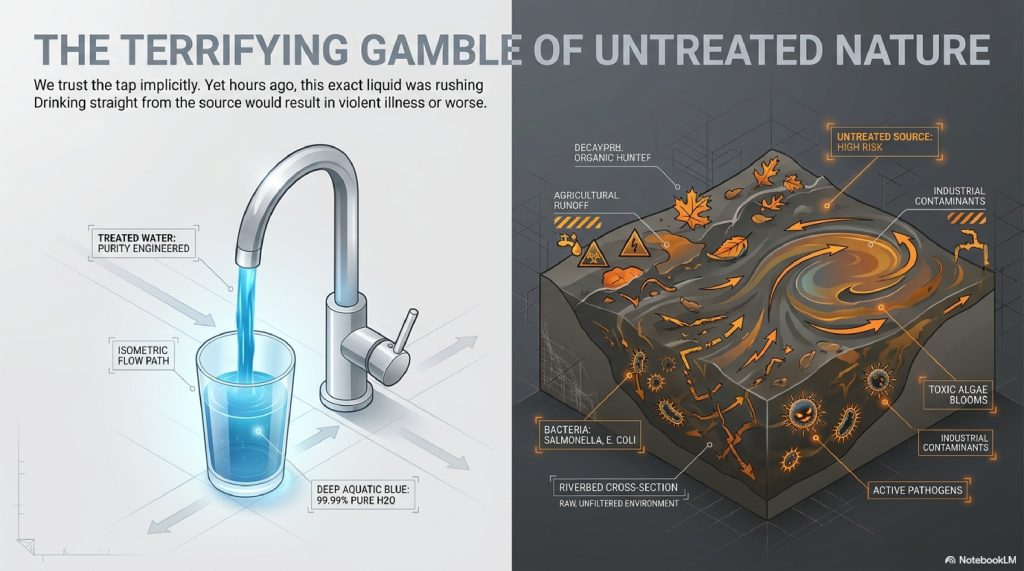
The answer lies in sprawling, industrial fortresses usually hidden on the outskirts of your city: Municipal Water Treatment Plants. These facilities are the unsung heroes of modern civilization. They perform a continuous, 24/7 mechanical and chemical ballet, processing hundreds of millions of gallons of toxic sludge into pristine hydration. They save more lives every single day than the world’s most advanced hospitals.
But how does it actually happen? How do you remove invisible poisons, microscopic bugs, and dissolved chemicals from billions of gallons of rushing liquid without slowing down a city’s supply?
If we strip away the concrete walls and look inside the pipes, the process reveals itself to be a masterpiece of physics, chemistry, and brute-force engineering. We are going to follow a single drop of dirty river water on its incredible journey through the gauntlet of a treatment plant.
Grab a glass of water. You’re about to find out exactly what it took to get it to your hand.
TABLE OF CONTENTS
- The Simple Explanation: The Multi-Stage Security Checkpoint
- Step-by-Step Breakdown: The Journey of a Drop
- Real-World Example: Waking Up in London
- The Advanced Technical Layer: Zeta Potentials and Free Radicals
- Common Myths About Drinking Water
- The Future of Water Treatment: Graphene and Toilet-to-Tap
- Fascinating Facts You Didn’t Know
- FAQs
- Other Blog Suggestions
- Conclusion
A. SIMPLE EXPLANATION
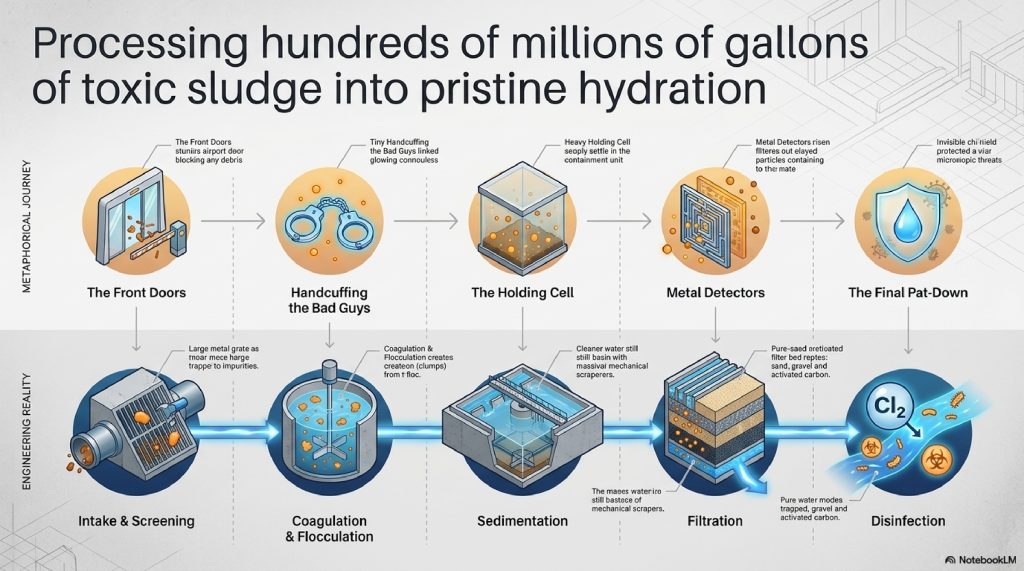
To understand how a water treatment plant works, think of it like an intense, multi-stage airport security checkpoint, but designed for microscopic intruders.
When a crowd of people (a rush of dirty river water) arrives at the airport, it’s chaotic. You have innocent travelers (pure water molecules) mixed with people carrying dangerous items (bacteria, mud, and chemicals).
- Stage 1: The Front Doors (Intake & Screening). The airport stops massive, obvious threats right at the door. Trees, fish, and trash are blocked from even entering the building.
- Stage 2: Handcuffing the Bad Guys (Coagulation). Security guards spray a sticky substance into the crowd. This substance magically only sticks to the criminals, handcuffing them together into large, heavy groups so they can’t run away.
- Stage 3: The Holding Cell (Sedimentation). Because these handcuffed groups of criminals are now heavy, they get tired and sink to the floor, where they are swept away. The innocent travelers keep walking forward.
- Stage 4: The Metal Detectors (Filtration). The travelers are forced to walk through a microscopic maze. Any tiny, leftover bad guys get caught in the maze. Only the purest water molecules make it through.
- Stage 5: The Final Pat-Down (Disinfection). Just to be absolutely sure, security guards spray a protective mist (chlorine) over the travelers. This neutralizes any invisible, ninja-like viruses that managed to sneak through, and keeps the travelers safe on their journey to your house.
B. STEP-BY-STEP BREAKDOWN
Now, let’s look at the actual engineering. What exactly happens inside those massive concrete tanks? The process of cleaning surface water (from lakes and rivers) generally follows five brutally efficient steps.
Step 1: Intake and Screening (The Brute Force Phase)
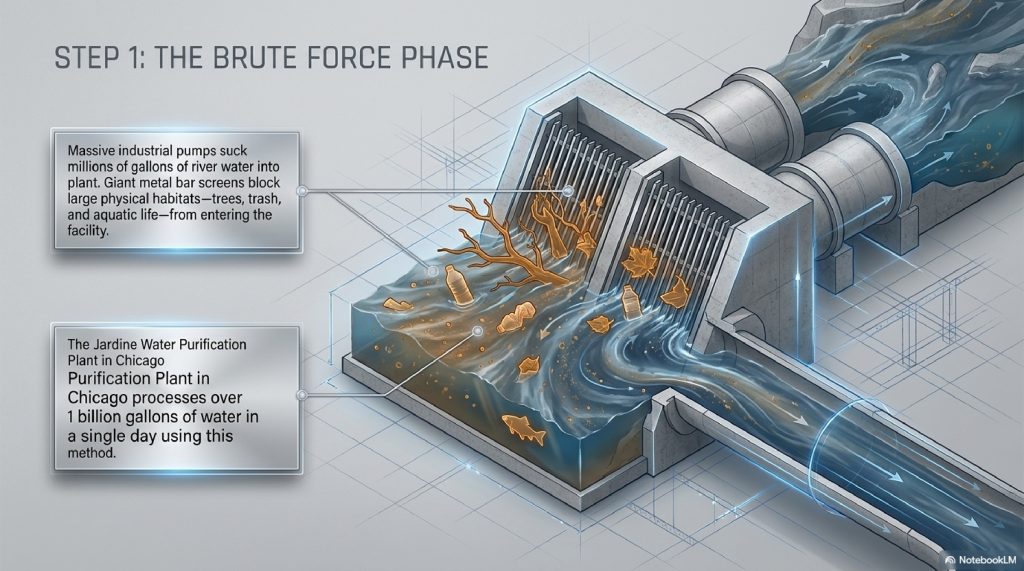
The journey begins at the source, a lake, river, or reservoir. Huge industrial pumps suck millions of gallons of water into the plant. But rivers aren’t just water; they are habitats.
Before the water even enters the main facility, it passes through massive metal screens (called bar screens). These screens act as giant combs, catching large debris: tree branches, plastic bottles, leaves, and yes, the occasional unlucky fish or turtle. The water rushing past these screens is still brown, murky, and utterly unsafe, but it is now free of large physical objects.
Step 2: Coagulation and Flocculation (The Chemical Magnet)
This is where the magic of chemistry begins.
The water is pumped into a massive mixing tank. The problem with dirty water is that the particles of mud, silt, and bacteria are so microscopic that they will not settle to the bottom on their own. They are suspended in the liquid.
To fix this, engineers inject coagulant chemicals (usually aluminum sulfate, known as “alum”) into the water. These chemicals have a positive electrical charge. The dirt and bacteria in the water naturally have a negative electrical charge.
Just like magnets, opposites attract. The positively charged chemicals instantly snap onto the negatively charged dirt particles, neutralizing them.
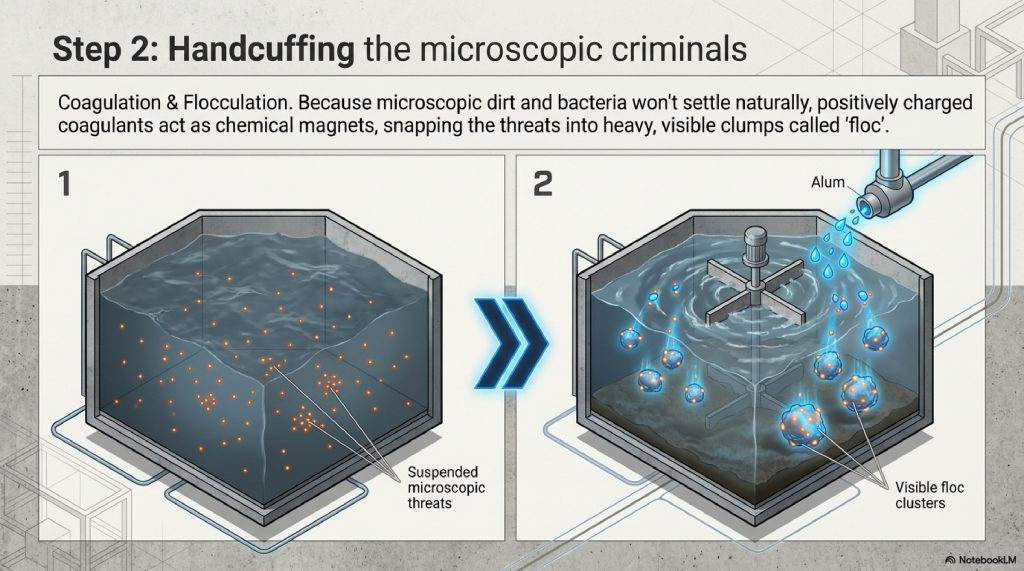
Next comes Flocculation. Giant mechanical paddles gently stir the water. As the neutralized dirt particles bump into each other, they stick together, forming larger and larger clumps. Think of it like rolling a snowball down a hill. These visible, fluffy clumps of dirt and bacteria are called “floc.”
Step 3: Sedimentation (The Gravity Drop)
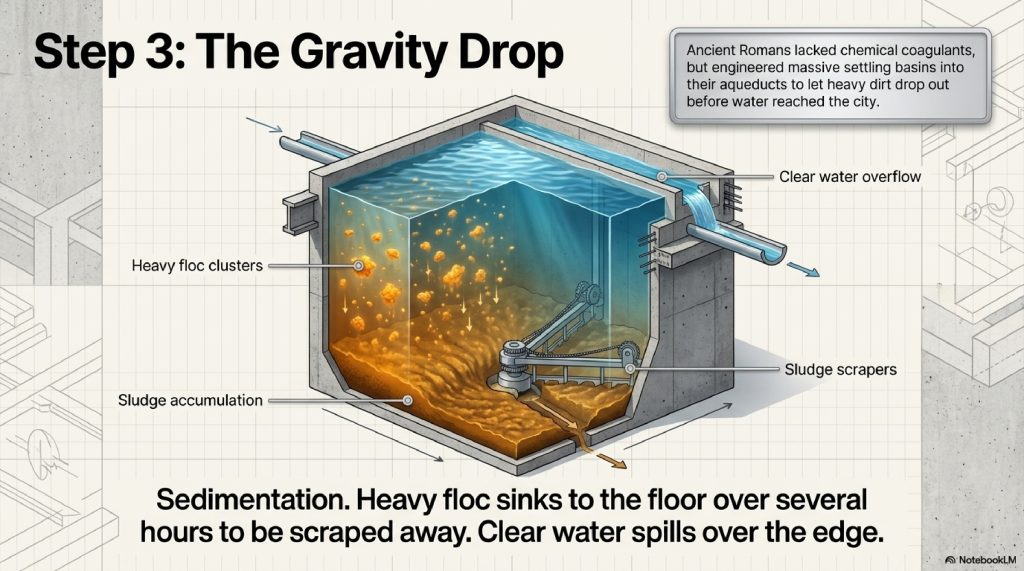
Now that the dirt has been clumped into heavy “floc,” the water flows into massive, incredibly still pools called clarifiers or sedimentation basins.
Because the floc is heavier than the water, gravity takes over. Over the course of a few hours, the heavy clumps slowly drift to the bottom of the basin, forming a layer of sludge.
Giant mechanical scrapers move along the bottom of the pool, scraping this toxic sludge away to be disposed of. Meanwhile, the clear water at the very top of the pool gently spills over the edges to the next stage. At this point, the water looks visually clear to the naked eye but it is still hiding invisible threats.
Step 4: Filtration (The Microscopic Sieve)
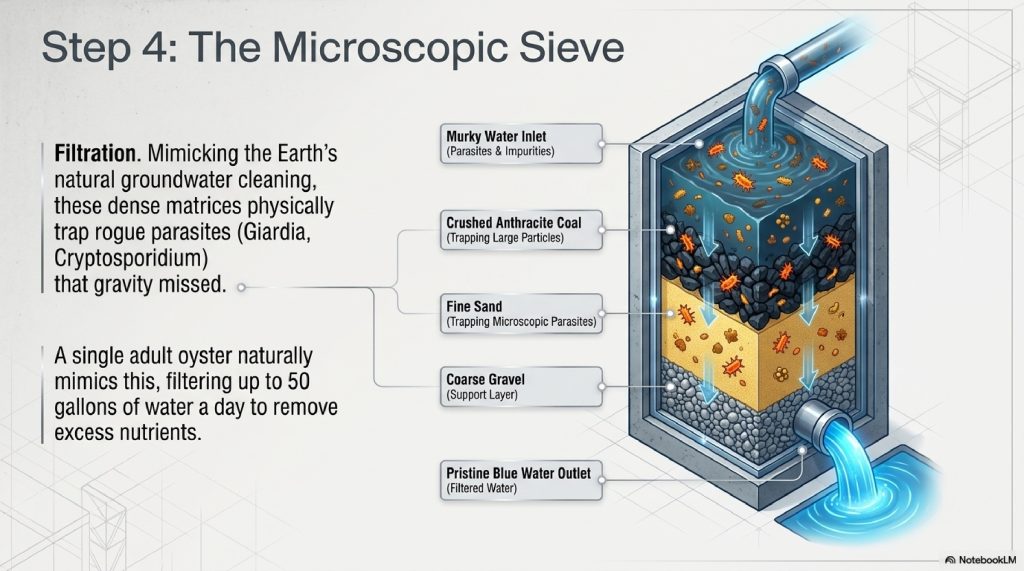
The clear water now flows into the filtration beds. These are essentially massive, multi-layered sieves that mimic how the Earth naturally cleans groundwater.
The water slowly percolates down through a layer of crushed anthracite coal, then a thick layer of fine sand, and finally a layer of gravel.
As the water drips through this dense matrix, the jagged edges of the sand and coal physically trap microscopic impurities, parasites (like Giardia and Cryptosporidium), and any rogue floc that didn’t sink in the previous step. By the time the water exits the bottom of the gravel, it is polished and crystal clear.
Step 5: Disinfection (The Invisible Assassin)
The water is now physically clean, but it might still contain microscopic viruses or bacteria that slipped through the sand.
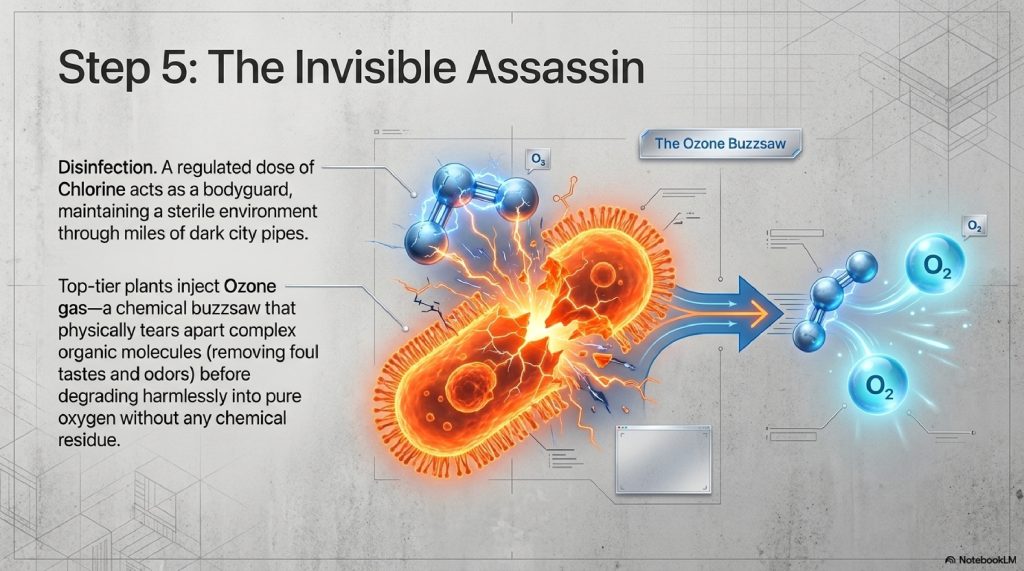
To guarantee safety, the plant introduces a chemical assassin: Chlorine (or Chloramine).
A precise, highly regulated dose of chlorine is injected into the water. It rips apart the cell walls of any remaining microorganisms, instantly killing them. Furthermore, the chlorine leaves a “residual” trace in the water. This is crucial; it acts as a bodyguard, keeping the water perfectly sterile as it travels through miles of dark, underground city pipes to reach your house.
Finally, depending on the municipality, fluoride is added to prevent tooth decay, and anti-corrosive agents are added to ensure the water doesn’t strip lead from old city pipes.
The water is now pumped into towering water towers or massive underground reservoirs, ready for you to turn on the tap.
C. REAL-WORLD EXAMPLES
Let’s look at two radically different real-world scenarios to see how this technology adapts to its environment.
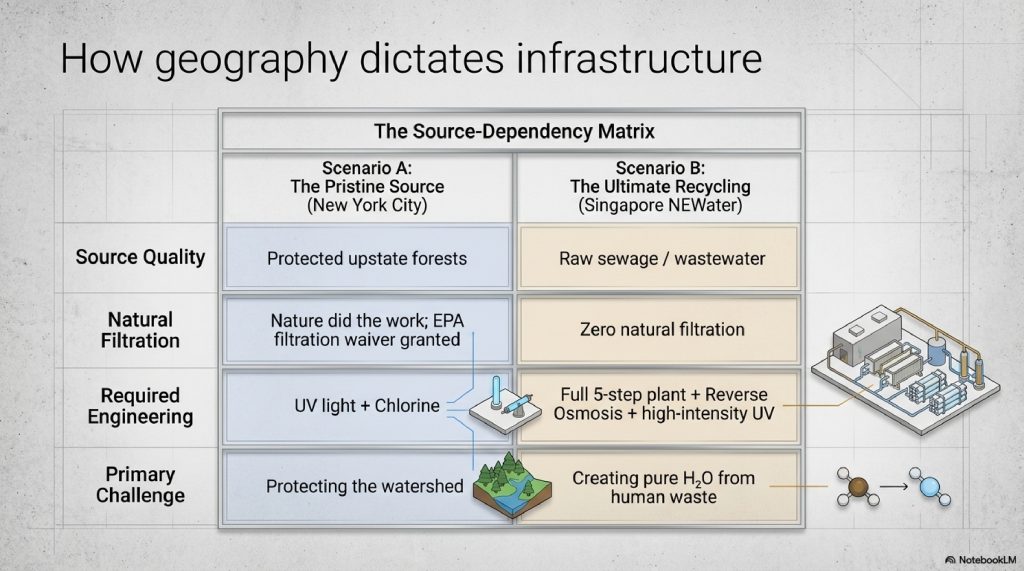
Scenario A: The Pristine Source (New York City)
New York City has some of the best tap water in the world. Why? Because it cheats. NYC gets its water from the Catskill/Delaware watersheds, located over 100 miles upstate in highly protected, pristine natural forests. The water is so naturally clean that the EPA granted New York a rare “filtration waiver.” NYC water undergoes intake, a massive dose of UV light to kill bugs, and chlorine disinfection, but it largely skips the heavy coagulation and sand filtration steps. Nature did the hard work for them.
Scenario B: The Ultimate Recycling (Singapore’s NEWater)
Singapore is an island nation with very little natural freshwater. To survive, they had to get creative. They utilize a system called NEWater, which literally treats raw sewage and turns it back into drinking water.
How? They run the standard treatment process, but then push the water through Reverse Osmosis (RO) membranes so tight that only pure molecules can pass through. Then, they blast it with high-intensity Ultraviolet (UV) light to obliterate any mutant DNA. The resulting water is actually too pure, they have to add minerals back into it so it doesn’t taste flat. Today, a significant portion of Singapore’s drinking water started as wastewater.
D. ADVANCED TECHNICAL LAYER
For the intelligent reader, let’s zoom in on the molecular and chemical warfare happening in these plants.
The Physics of Coagulation: Zeta Potential
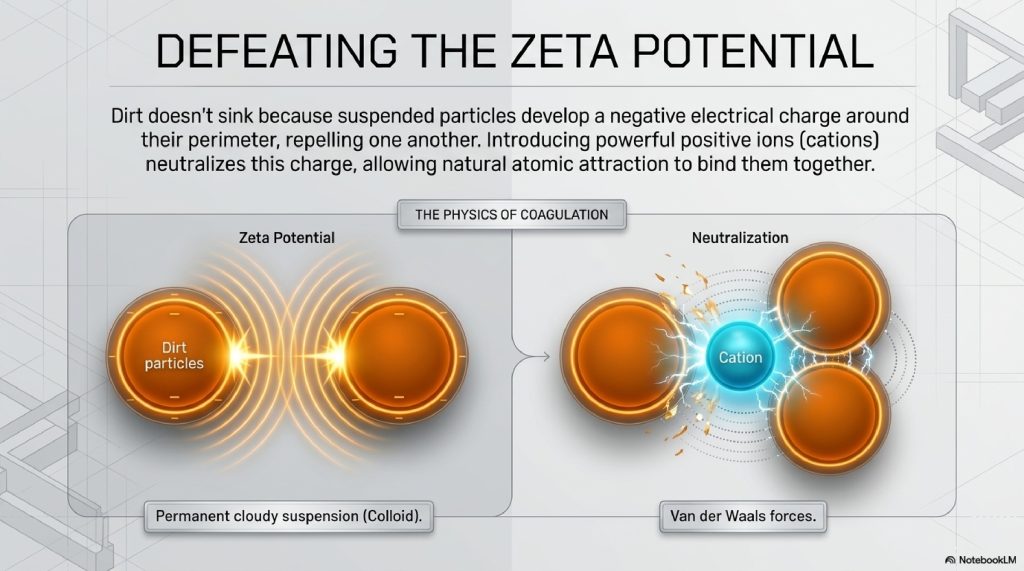
Why doesn’t dirt just sink on its own? It’s because of something called the Zeta Potential. Microscopic particles suspended in water naturally develop a negative electrical charge around their perimeter. Because two negative charges repel each other, these tiny dirt particles act like opposing magnets. They constantly push each other away, remaining in a state of permanent, cloudy suspension (called a colloid).
When engineers add an aluminum or iron-based coagulant, they are introducing powerful positively charged ions (cations). These cations rush in and neutralize the Zeta Potential. Without the repulsive force keeping them apart, Van der Waals forces (natural atomic attraction) take over, allowing the particles to crash into each other and bind together.
Advanced Oxidation: Ozonation
Many top-tier modern plants don’t just rely on chlorine; they use Ozone () gas.
Ozone is an incredibly unstable, aggressive molecule. When pumped into water, it creates hydroxyl radicals. These radicals are chemical buzzsaws. They don’t just kill bacteria; they physically tear apart the complex organic molecules that cause bad tastes and odors (like the earthy-tasting chemical geosmin produced by algae). Once the ozone does its violent work, it quickly degrades back into pure, breathable oxygen (), leaving no chemical residue behind.
E. COMMON MYTHS OR MISCONCEPTIONS
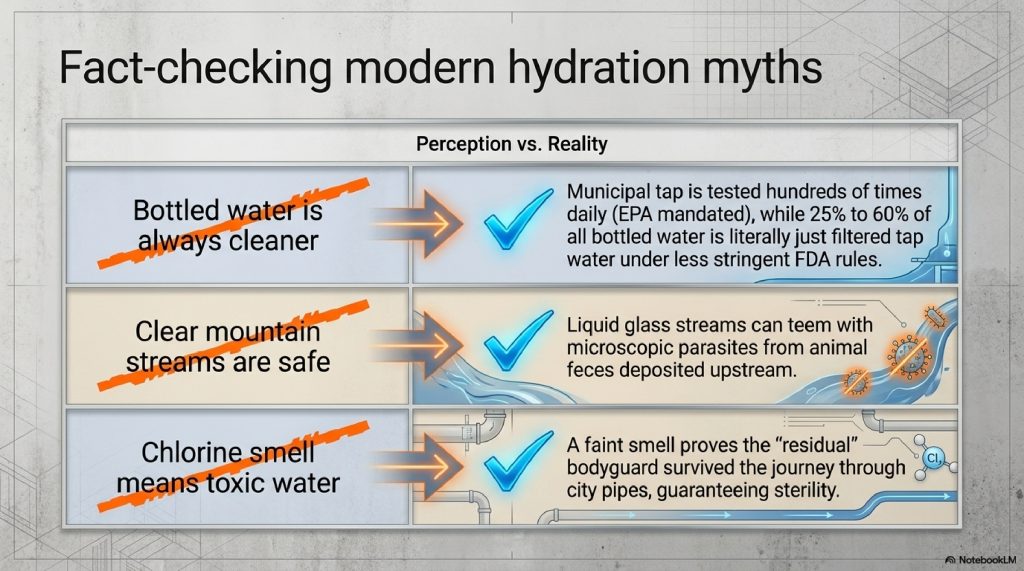
Myth 1: “Bottled water is always safer and cleaner than tap water.”
Reality: In many developed nations (like the US), tap water is actually more strictly regulated than bottled water. The EPA requires municipal water plants to test their water hundreds of times a day and make the results completely public. The FDA, which regulates bottled water, has far less stringent testing and reporting requirements. In fact, an estimated 25% to 60% of all bottled water is literally just filtered municipal tap water put into a plastic bottle.
Myth 2: “If water in a mountain stream looks perfectly clear, it’s safe to drink.”
Reality: Never trust “clear” nature. A mountain stream can look like liquid glass and still be teeming with Giardia lamblia or Cryptosporidium microscopic parasites deposited by animal feces just a few miles upstream. Drinking it can result in weeks of agonizing gastrointestinal illness.
Myth 3: “The smell of chlorine means my water is highly toxic.”
Reality: A faint smell of chlorine is actually a sign that your water distribution system is working correctly. It means the “residual” chlorine has survived the journey through the city pipes to your home, ensuring no bacteria could grow along the way. If the smell is overwhelming, letting the water sit in an open pitcher in the fridge for an hour allows the chlorine gas to harmlessly evaporate.
F. THE FUTURE OF THE TECHNOLOGY
The global population is exploding, and climate change is causing severe droughts. The future of water treatment is shifting from “cleaning rivers” to “manufacturing water.”
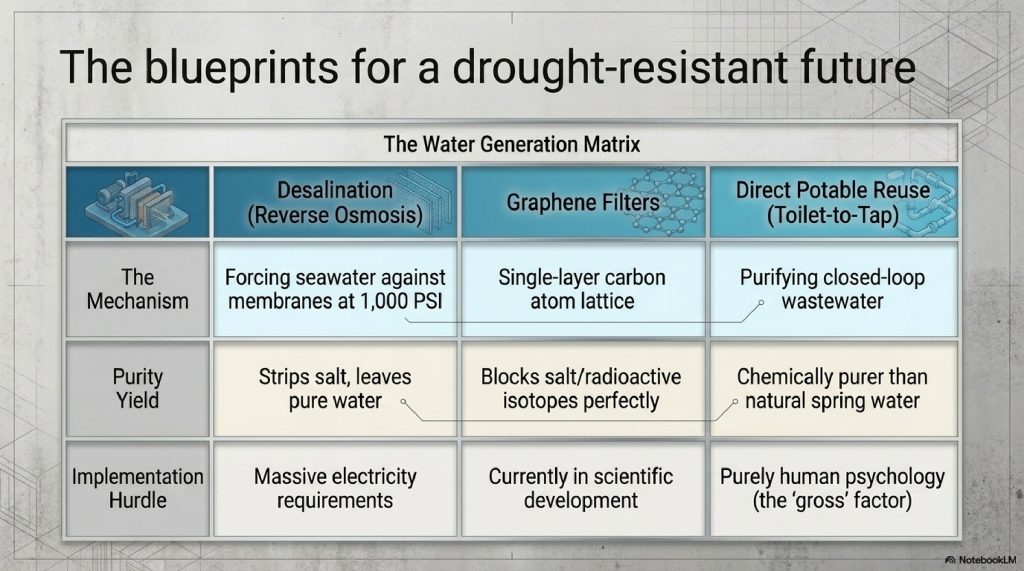
1. Desalination and Reverse Osmosis
The oceans hold 97% of the Earth’s water, but it’s full of salt. Modern desalination plants use High-Pressure Reverse Osmosis. They force seawater against a synthetic membrane at 1,000 pounds per square inch. The salt is left behind, and pure water pushes through. Historically, this required massive amounts of electricity, but new energy-recovery turbines are making ocean water a viable drinking source for coastal megacities.
2. Graphene Filters
Graphene is a miracle material consisting of a single layer of carbon atoms arranged in a honeycomb lattice. Scientists are currently developing graphene oxide sieves that have holes exactly large enough to let water molecules through, but small enough to block salt ions and radioactive isotopes. This could make purifying water 100 times faster and vastly cheaper.
3. Direct Potable Reuse (Toilet-to-Tap)
It sounds gross, but it is the inevitable future of dry states like California and Texas. Instead of pumping treated wastewater into a river, letting it flow downstream, and then sucking it back up into a drinking plant, cities are building closed-loop systems. Wastewater will be purified using reverse osmosis and UV light to a level that is chemically purer than natural spring water, and sent directly back to your tap. The technology is flawless; the only hurdle left is human psychology.
G. INTERESTING FACTS SECTION
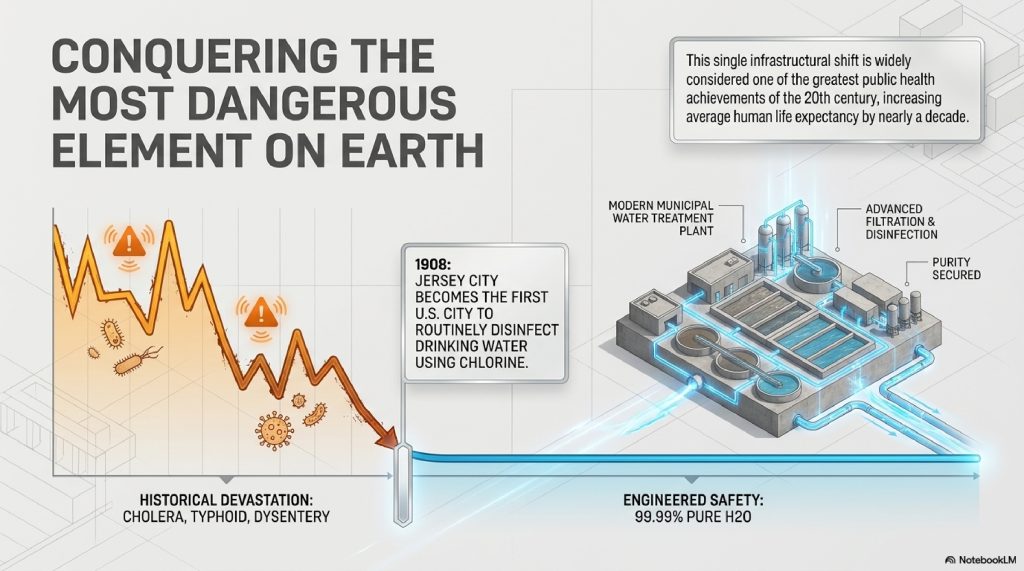
- The Savior of Millions: In 1908, Jersey City, New Jersey, became the first city in the U.S. to routinely disinfect its drinking water using chlorine. Following this, the dramatic drop in typhoid, cholera, and dysentery rates is widely considered one of the greatest public health achievements of the 20th century, increasing average human life expectancy by nearly a decade.
- The Roman Way: The ancient Romans didn’t have chemical coagulants, but they built settling basins into their massive aqueducts. The water would slow down in these basins, allowing heavy dirt and sand to drop to the bottom before continuing into the city.
- Massive Scale: A large municipal water plant, like the Jardine Water Purification Plant in Chicago, can process over 1 billion gallons of water in a single day.
- Nature’s Filter: Oysters are incredible natural water filters. A single adult oyster can filter up to 50 gallons of water a day, consuming algae and removing excess nutrients, which is why restoring oyster reefs is a major goal for cleaning up polluted bays.
H. FAQ SECTION
1. Why is fluoride added to drinking water?
Fluoride is a naturally occurring mineral. Since the 1940s, municipalities have adjusted fluoride levels in water to an optimal concentration (usually around 0.7 parts per million) to strengthen tooth enamel and drastically reduce cavities, especially in children. The CDC calls it one of the top ten public health achievements of the 20th century.
2. What is “hard” water? Is it safe to drink?
Hard water simply means the water has high levels of dissolved minerals, specifically calcium and magnesium. It is 100% safe to drink (and actually provides dietary minerals). However, hard water can leave white, chalky scale buildup on your showerheads and make soap less bubbly.
3. How do treatment plants remove “forever chemicals” (PFAS)?
PFAS (per- and polyfluoroalkyl substances) are notoriously difficult to remove because they don’t break down easily. Standard sand filtration doesn’t work. Advanced plants are currently upgrading to use Granular Activated Carbon (GAC) filters, Ion Exchange Resins, or High-Pressure Reverse Osmosis to trap and remove these synthetic chemicals.
4. Why does my tap water sometimes look milky or cloudy?
If your water looks milky but clears up from the bottom up after sitting for a minute, it is completely harmless. It is just tiny, trapped air bubbles caused by pressure changes or cold water warming up in your pipes.
5. What is the difference between a water treatment plant and a wastewater plant?
A water treatment plant takes natural water (from a river or lake) and cleans it until it is safe for humans to drink. A wastewater treatment plant takes the water you flush down your toilet or drain, cleans the human waste and chemicals out of it, and safely releases it back into a river or ocean.
6. Does a Brita pitcher actually do anything?
Yes, but it’s a “polishing” step. Most home water pitchers use Activated Carbon. The carbon absorbs residual chlorine, improving the taste and smell of the water. However, it is not designed to kill bacteria or make biologically unsafe water safe to drink.
7. How do plants know if the water is contaminated?
Plants use continuous, automated digital sensors that monitor turbidity (cloudiness), pH, and chlorine levels 24/7. Additionally, human chemists take physical samples every few hours to test for heavy metals and culture bacteria in a lab to ensure absolute compliance with safety laws.
8. Is rainwater safe to drink?
Generally, no. As rain falls through the atmosphere, it can absorb air pollution. Once it hits your roof, it washes bird droppings, dust, and heavy metals from your shingles directly into your rain barrel. Rainwater must be filtered and disinfected before consumption.
9. Why do water pipes sometimes freeze and break?
Water has a bizarre chemical quirk: it expands when it freezes. If water sits still inside a city pipe during a deep freeze, it turns to ice, expands with incredible hydraulic force, and literally blows the metal pipe apart.
10. How much does a gallon of tap water cost?
In the United States, municipal tap water is an astonishing engineering bargain. It costs, on average, about half a penny per gallon. You would have to drink 200 glasses of tap water to spend a single dollar.
I. OTHER BLOG SUGGESTIONS
- How Biometric Authentication Protects Your Phone & Bank
- How DNS Works: Translating Website Names into IP Addresses
- How Spacecraft Communicate Across Millions of Kilometers
- How Global Shipping Systems Work: The World’s Physical Internet
J. CONCLUSION
The next time you fill a glass of water from your kitchen sink, take a moment to look at it before you drink.
Hold it up to the light. It is perfectly transparent. It has no smell. It harbors no lethal diseases.
What you are holding is not a natural occurrence; it is a highly engineered product. It is the culmination of over a century of human intellect waging war against the microscopic dangers of the natural world. It represents massive concrete clarifiers, the invisible dance of electromagnetism, the crushing force of sand filters, and the quiet vigilance of chemists working through the night.
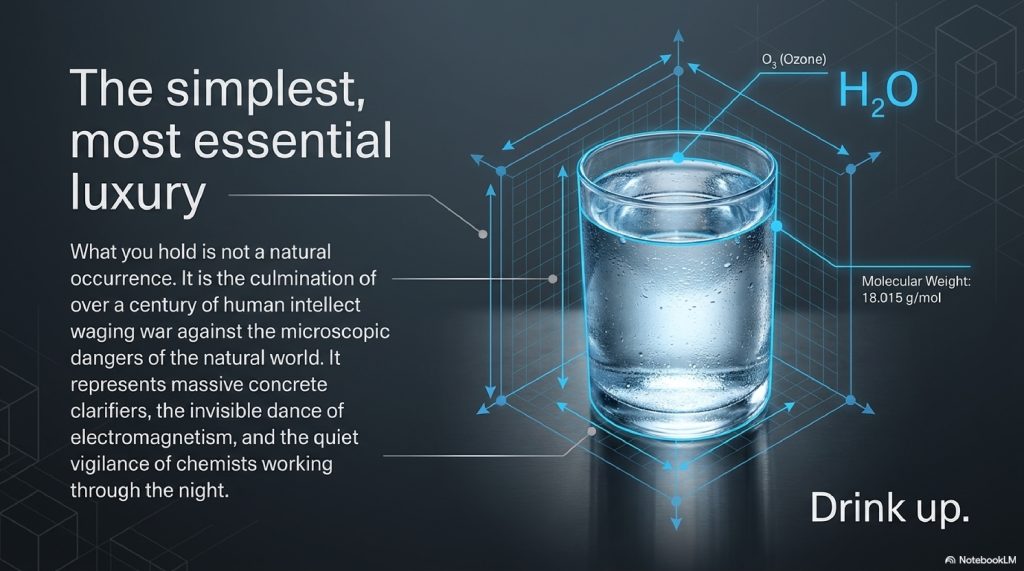
We take it for granted because the system works so incredibly well. The symphony of the municipal water treatment plant is designed to be invisible, humming away on the edge of town, silently guarding our health. It transforms the chaotic, dirty, and dangerous reality of nature into the simplest, most essential luxury of human life: a safe glass of water. Drink up.